Ask most business owners what threatens their data, and they’ll say “hackers” or “ransomware.” Ask an IT team who actually deals with data loss, and they’ll tell you a different story: most of it comes from ordinary people doing ordinary things, every single day, without realising the risk.
It’s the same insight that sits behind every workplace safety campaign you’ve ever seen – most incidents don’t come from one dramatic failure, they come from small unsafe habits that quietly compound until something breaks. Data loss works exactly the same way.
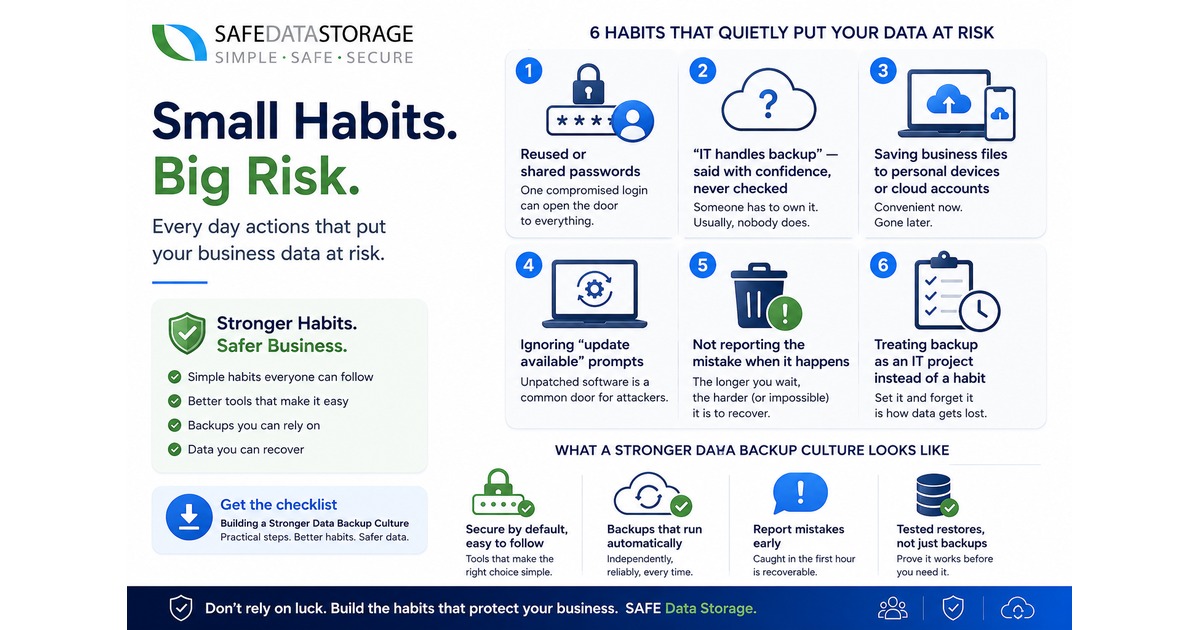
Six habits that quietly put your data at risk
1. Reused or shared passwords. One compromised login often means one compromised everything, because the same password unlocks three other systems nobody remembers exists.
2. “IT handles backup” – said with total confidence, never checked. We’ve written before about how many businesses assume Microsoft or Google backs up their data by default. They don’t. Someone has to actually own this, and in most businesses, nobody does.
3. Saving business files to personal devices or personal cloud accounts. Convenient in the moment, invisible to any backup policy, and gone the moment a laptop dies or an employee leaves.
4. Ignoring “update available” prompts. Unpatched software is one of the most common entry points for the exact ransomware attacks that make untested backups suddenly very relevant.
5. Not reporting the mistake when it happens. Someone deletes the wrong folder, panics, hopes nobody notices, and says nothing. The window to recover quietly closes while everyone stays quiet.
6. Treating backup as an IT project instead of a habit. Set up once, never revisited, never tested – which is exactly the failure pattern behind some of the most infamous data loss incidents in tech history.
None of these are stupidity. They’re just habits.
That’s actually the useful part of this framing: nobody sets out to lose company data. These behaviours persist because they’re convenient, invisible, and nobody’s ever walked through what they actually risk. The fix isn’t a lecture – it’s the same thing that works for any safety culture: clear expectations, the right tools made easy to use, and a system that catches the mistake before it becomes permanent.
What a stronger data backup culture actually looks like
• A password manager that makes the secure option the easy option, instead of relying on willpower
• Backup that runs independently of any one person remembering to do anything
• A habit of reporting mistakes immediately, because a deletion caught in the first hour is recoverable, and one caught after 30 days often isn’t
• Regular, actual testing of restores – not just backups running, but someone confirming they work
Get the checklist
We’ve put together a short, practical guide – Building a Stronger Data Backup Culture – with the specific habits to fix first and how to start. Pop your details below and we’ll send it straight over.
Or skip straight to seeing how SAFE Data Storage removes the “did someone remember to do this” problem entirely.